


Hallway Wall Murals: Ideas for Entryways and Corridors
A hallway is a small space that gets a lot of attention. It is the first view of your home for guests and the last thing you see when you leave. A wall mural turns a plain corridor into a welcoming space, and it works well because a hallway usually has one long, clear wall to decorate.
Why a mural works in a hallway
Corridors are often narrow and have no furniture to draw the eye. A mural gives the wall a focal point, so the space feels designed rather than like a passage. Because the wall is seen from many angles as you walk past, a bold but calm design keeps its impact.
Ideas for a long corridor
A long, narrow hallway looks more balanced when the design has depth. Landscapes, forests and tree murals draw the eye into the distance, which makes the corridor feel longer and more open. Browse our landscape murals and tree murals for ideas that carry the eye along the wall.
Ideas for a small entryway
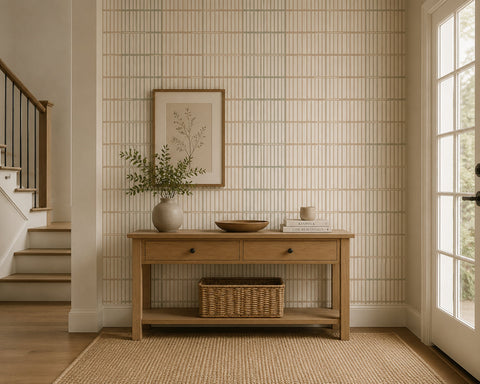
In a small entry, one mural on the wall you see first works better than a design on every wall. Choose a single panel-style design, or a mural with a clear centre, and keep the other walls quiet. Abstract and geometric designs are a good choice here, because they look modern and do not need much space to work. See our abstract murals and geometric murals.
Ideas for a dark hallway
If your hallway has little daylight, choose a design with light colors and open scenes, such as sky, water or light forest. Dark, heavy designs can make a dark corridor feel smaller. A mural with a light background reflects more of the light you have. For a softer, natural look, try nature murals.
Marble and texture for the entrance
Marble is a classic choice for an entryway. It looks like stone without the weight or cost, and it suits both modern and traditional homes. See our marble murals and texture murals.
Where to place the mural
- On the wall opposite the front door so it is the first thing you see when you come in.
- Along the staircase wall, following the line of the stairs with a diagonal or landscape design.
- Away from the spot where bags and shoes brush the wall. Most hallways have one wall that gets touched every day. Choose a different wall for the mural, or use a finish you can live with.
Measure carefully
Hallway walls often have doors, light switches, radiators and sockets. Measure the full wall and mark where these will sit before you order. Add 5-10 cm (2-4 in) to both sides for trimming, as explained in our measuring guide. Cut the panels around switches and sockets, and leave the design uncut where it matters most.
Renters and temporary spaces
Many hallways are in rented flats. Peel-and-stick murals are removable and need no paste, so they are a good choice if you may move out later. Check the materials page to compare finishes.
Styling tips
- Keep the floor and furniture simple so the mural is the main feature.
- Use a mirror or a simple console table on the opposite wall to balance the design.
- Match the frame and lighting colors to the mural, not the other way round.
- Choose a mural in colors that already appear in your front door or floor.
FAQ
Is a wall mural a good idea for a hallway?
Yes. A hallway usually has one long, clear wall, which suits a mural well. Choose the wall carefully so that the design is not damaged by daily use.
Which designs make a hallway look bigger?
Landscapes, forests and tree murals with a sense of distance make a corridor feel longer and more open. Light colors help too.
Can I put a mural on the stairs wall?
Yes. Follow the line of the stairs with a diagonal or landscape design, and measure the wall along its full height before you order.